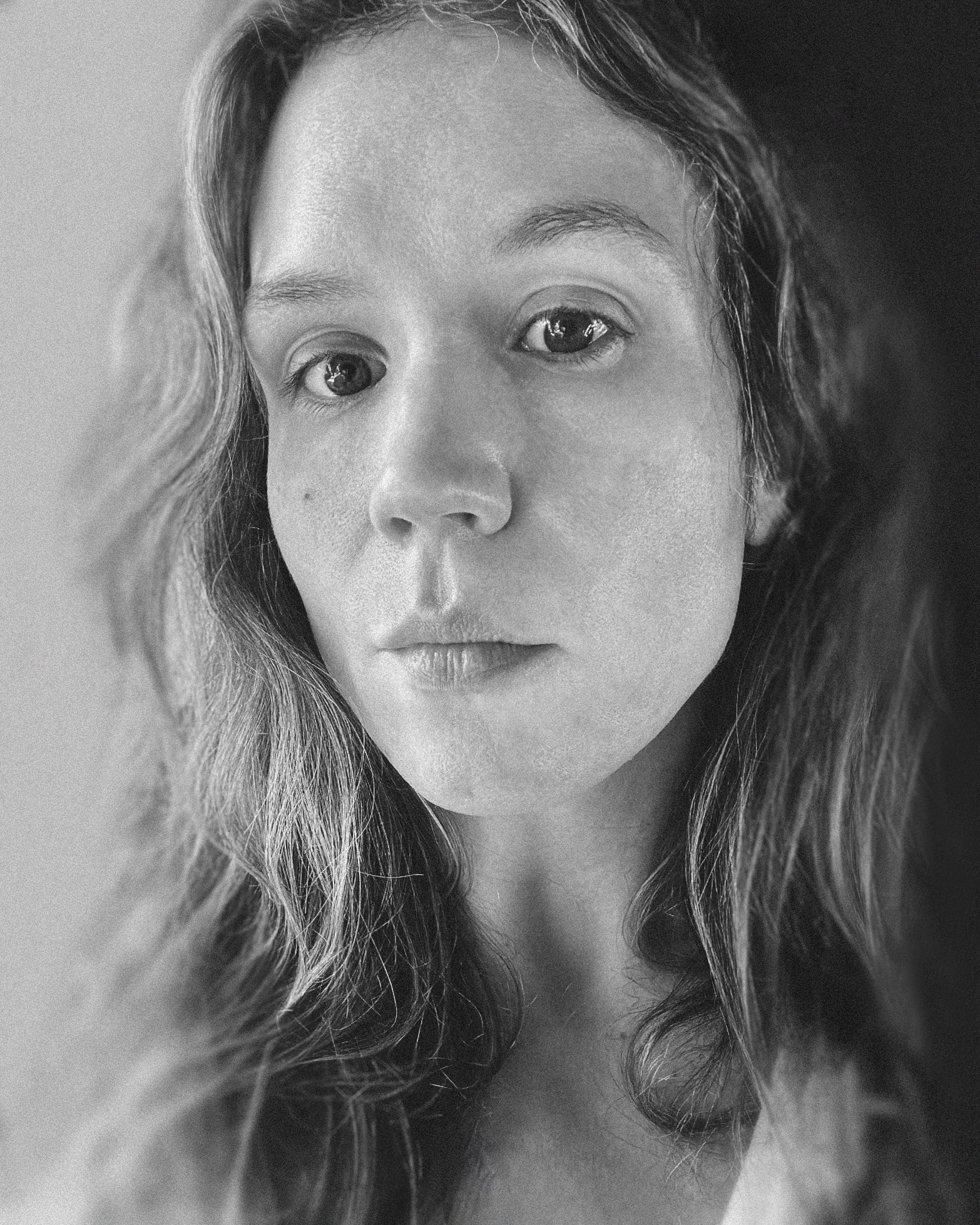
Photographer Alexander Karlov on Career, Style, and Success
Fashion and portrait photographer Alexander Karlov has a magnetic, persuasive energy. In meeting him, it was little surprise that at 26 he has seen the success he has: he’s driven and passionate about his craft and knows that these qualities alone are rarely enough to make it in the industry of commercial photography.
In our conversation, Karlov spoke about his introduction to photography, his career path and below, shares his advice for aspiring photographers.

Fashion and portrait photographer Alexander Karlov.

Alexander Karlov x Format
Creare un impatto immediato e costruire il vostro marchio
Il fotografo di moda e ritratti Alexander Karlov ha collaborato con Format per progettare una pagina di marketing convincente. Partite dal suo design e fatelo vostro per acquisire clienti e far crescere la vostra attività.

Costruite subito la vostra prossima presentazione ai clienti con flex block!
On His Start & Career Path
At 26, Alexander Karlov has been working full time as a fashion & portrait photographer for four years. What first drew you to photography and how did you turn it into a full-time career?
Alexander: My start was at 17. My godfather gave me a Nikon D300, and I just started playing around with it and taking pictures of the city and architecture. I quickly got bored of shooting cityscapes and started taking pictures of people—friends, models I messaged on Instagram. I took a 2 year break from photography as I had to devote myself to my university studies, but during my second year I picked up a camera again and resumed my hobby.
Work started coming in, and then in 2019, I began assisting one of the most acclaimed photographers in Canada and also got a contract with Nikon Canada. That was a turning point, because it was really starting to affect my university degree—I was studying economics and finance—so I had to make a decision. I knew as soon as I graduated, I was going to go full-time into photography.
Is formal education necessary for a photographer’s success?
Alexander: I don’t think a formal education is necessary. I tell beginner photographers: the best thing you can do for your photographic journey is find one of the top photographers in your city and assist them, even if it’s unpaid. Be with them on set as much as you can and observe. A lot of famous photographers started their career by assisting someone—Mario Sorrenti assisted Steven Meisel, David Sims assisted Nick Knight—a degree doesn’t really matter that much. Everyone’s just going to look at your portfolio and your connections, and that’s what’s going to matter.


Una guida per migliorare le vostre abilità fotografiche
Migliorate la vostra fotografia con la nostra guida gratuita. Ottenete l'accesso esclusivo a suggerimenti, trucchi e strumenti privilegiati per perfezionare il vostro mestiere, costruire il vostro portfolio online e far crescere la vostra attività.
Ricevi il meglio della rivista Format nella tua casella di posta elettronica.
Like many artists, Karlov didn’t start out in a creative field. You have a degree in economics and finance. Was it hard to justify the switch to a creative career, especially with your family?
Alexander: My family didn’t know I was devoting so much time to it. They strongly disapproved; it hurt at the time, and caused a rift in my relationship with them. But I realized they just wanted me to succeed. They come from a different generation that prioritised traditional jobs and a formal education. We’re good now. They had to notice that I’m good at it and that it supports me financially. It took some time, but my mom, who is incredibly stoic, is now fully on board. I always see her in my Instagram stories.
At the beginning, my grandfather was the only one who was instantaneously supportive. Right before he passed away about three years ago, I showed him some of my latest work on my website when I saw him in the hospice. It was a good memory because he was the only one in my family who was supportive from the start.


On the Business of Photography
Every photographer has, at some point, been their own booker, studio manager, and accountant. Karlov speaks candidly about the demands of the business of being a professional creative.
You’ve mentioned that photography is a highly competitive field. What do you think it takes to succeed today?
Alexander: I personally do not recommend anyone going into photography. It’s a bad idea. But the thing is, for people that really want to do it, my opinion will be irrelevant to them—they’re still going to do it. Those are the ones who should stay in it. The barrier to entry is extremely low now, which creates an insane amount of competition. You have to be way better than your competitors, deliver extremely great results, and have good communication skills. You have to be able to reach out to people.
How do you balance being an artist with being in a business that heavily emphasizes networking?
Alexander: I had to fight introversion. You have to be a business person, too. And in the photographic world, you have to be very, very good because there’s tons of competition. A lot of people won’t even hire you just for your skills, but for your personality and what you bring on set. If you’re annoying, that’s not going to fly for long. If you are introverted, you have to get over that.
What part of your process do you think would surprise people if they had assumptions about the way you work?
Alexander: Maybe the amount of detail and how picky I am. If you see a meme on Instagram or TikTok where a photographer is sitting at home at 3 a.m. debating about three levels of saturation—yeah, that’s me. Something that no one will ever notice except me.

The Creative Process in Fashion and Portrait Photography
Professional photography is rarely a solo effort. It takes a team of art directors, stylists, and assistants to achieve results.
When shooting portraits, do you spend time with your subjects first? What is your process when working with a team?
Alexander: You have to have a good atmosphere on set. I cannot be in a bad mood—the final image depends on me, and the model is looking at me for direction. I have to learn to suppress my emotions a little bit. You learn to be a bit of a psychologist, you listen and you work around personalities, everyone has to be on good terms.
I have a trick: if it’s a new client who is not used to being on camera, I will not show the first ten minutes of images. Once I get something really cool, I will show that. Instantly, their level of confidence goes up, and I’ll say, “All images are like that. We’re doing good.” That works.
You have a growing interest in film photography. How did that come about, and what does it bring to your work?
Alexander: I have a fascination with vintage-looking, analog photos, and I try to incorporate that aesthetic into my work. With insane modern technology, you start to lose a little bit of situational awareness when you can take a thousand images in a few minutes. Shooting on film helps you to improve your visualization because you cannot see the photos until they’re developed. You have to train your brain to envision your final result.
I recently bought a Mamiya RZ67. This thing is 50 years old and still working perfectly and the sound of the shutter release is so satisfying. It is extremely heavy and hard to use and that means it—any film camera, but this one especially—forces you to slow down. You have to meter every shot and plan in detail–it forces you to visualize more and train your eye.
We talked about how much success is tied to having a distinct style. How would you describe yours?
Alexander: I definitely like very contrasty, vintage looking shots. There’s a high contrast to almost all of my work, and I boost it in post-production, but also with my lighting. With my work I also try to bridge the gap between art and commerce to tell a visual story and I like to show my subject’s strength and encourage authenticity. I think a good model, a good story, and elegant styling—that’s what makes a great image. All three components have to complement each other to make something unique and mesmerizing. If a client or a model tells me, “I can easily recognize your work among others,” that is a huge compliment for me.


An Eye on the Industry
You use Format for your online portfolio. Why did you choose our platform?
Alexander: I switched to Format about four years ago–I had seen the little “Using Format” at the bottom of a website by a photographer I admired. I loved that it allowed for very high-res images to be displayed. When you’re looking at the shots on a 27-inch screen, that matters to me. Ultimately, I like the fact that they’re catered towards photographers and artists. I use the Gallerie di clienti all the time for photo selection and have started using the flex block feature to create client moodboards, so it’s becoming part of my workflow.
Who are some of your favorite photographers, what work inspires you?
Alexander: If we’re talking about the classics, definitely Peter Lindbergh, Richard Avedon, Irving Penn, Steven Meisel, Helmut Newton. For modern photographers, I love Giampaolo Segura, an Italian fashion photographer. Also Sonia Szostak, who shoots mainly on film–she’s incredible, and Jack Davison, Lachlan Bailey. Last year I discovered Tarek Mawad. Looking at good work is very important—that trains your eye.

How are you feeling about the impact of AI on the photography industry?
Alexander: I think you should embrace certain change. I use a bit of AI in my work occasionally, but it’s just a tool. I am not planning to generate anything from scratch. As a fashion and portrait photographer, definitely some people will lose their jobs. But I think if you’re one of the best, you’re not really at risk. If you have a distinct style and personality, and people can tell it’s your imagery, I think you’re safe. I think as AI generated imagery and use grows there will be a growing counterforce—the demand for authenticity, depth, human connection and imperfections.

On Ambition and the Lifestyle of a Working Photographer
You’ve spoken about the need to hustle and your strong ambitions, like reaching milestones by age 30. How do you maintain that intense work ethic, and what do you do when you step away from the camera?
Alexander: It’s hard. I work a lot, usually six or seven days a week. People don’t realize how much work success takes. I have a lot of shoots, then I need to edit a ton of images, give instructions to my retoucher, handle marketing, meetings, emails, and work on my website. I usually devote six hours on a Saturday just to promotion, writing cold emails and prepping content, so I don’t have to do it during the week. It’s hard for me to not edit or shoot for more than a week—I need to hear that shutter click.
For fun, when I’m in Moscow or abroad, I go out non-stop, but in Montreal, life is a little more mundane and boring. I force myself to go out one day a week, because otherwise, you go a little cuckoo. I also enjoy the gym and the spa, and spending time with friends.
Rest is very important. I learned not to overwork myself. I had a year where I burnt out, and I didn’t want to work for two months. Now, when I feel that I’m burning out, I stop. My formula for happiness right now is to work like a lunatic for three months, and then go abroad for a month and work gently or take a complete pause. But I suspect this formula might change later in life.
My ambition is driven purely for me. I enjoy doing it just for myself. It’s like transferring my inner world to the outside world.

Alexander Karlov’s 8 Tips for Aspiring Photographers
- Seek an Apprenticeship: The single best thing you can do is learn the craft and the business hands-on through a pro in the field.
- Focus on Your Portfolio and Connections: Your success depends almost entirely on the quality of your portafoglio e il connections you build. Put time into both.
- Fight Introversion & Network: You must be a business person and overcome shyness. Clients often hire for your personality and what you bring on set.
- Deliver Excellence & Detail: The competition is fierce; you have to be exceptionally good, you have to hone your craft to deliver results.
- Master the Set Atmosphere: Your job is to create a good atmosphere and guide the subject. Positively managing personalities will get you the best performance out of your models and team.
- Slow Down to Train Your Eye: Incorporate shooting methods (like film photography or limiting your number of frames) that force you to slow down and train your brain to visualize the final result before you click the shutter.
- Cultivate a Distinct Style: Develop a style that becomes instantly recognizable as yours.
- Hustle but Remember to Schedule Rest: Be prepared to work intensely shooting, editing, and promoting your work, but schedule time to rest to prevent burnout.
See more of Alexander Karlov’s work on his Sito web del portfolio Format and follow him on Instagram for a glimpse behind the scenes.
Costruite il vostro portafoglio con Format
Il costruttore di portfolio online #1 è stato valutato da artisti e creatori.
Collaboratore
-

Julia Martin è un'artista interdisciplinare e scrittrice di Montreal. Con un master in arti visive e un master in fotografia, il suo lavoro è stato esposto in Canada, Cina, Francia e Finlandia, anche in diverse residenze d'artista. Ha insegnato all'Università di Ottawa, ha fatto parte di giurie artistiche e ha quindici anni di esperienza come fotografa freelance. La pratica artistica di Julia potrebbe essere meglio descritta come "storie tristi punteggiate da battute"."
Anche se a volte è il contrario.