


3D imagery can profoundly transform your artistic work, adding compelling depth and interactivity that changes the viewing experience. Mastering 3D techniques offers a powerful avenue for innovation for photographers, artists, and creatives. This updated guide will teach you everything you need to know, from foundational principles to cutting-edge technologies that empower unique artistic expression!
Technology has radically reshaped the creative landscape in recent years. In today’s competitive visual market, professional photographers, artists, and creatives need to continuously evolve their craft to engage clients and audiences. As new equipment, sophisticated software, and artificial intelligence have democratized image creation, 3D photography stands out as a unique way to differentiate your online portfolio and push the boundaries of your artistic practice. Showcasing a diverse range of visual storytelling techniques is key, and 3D imagery, in particular, offers an opportunity to grab attention and immerse viewers. Let’s delve into the essentials of spatial imaging!
3D Photo Basics
Creating compelling 3D images involves various camera setups and software, each offering distinct creative possibilities. While a 3D picture can be synthesized from a single 2D image in post-production, many artists find the deliberate process of traditional stereoscopic capture more satisfying and reflective of their skill.
For those embracing classic techniques, emphasizing your approach adds significant value. When you present a 3D image in your portfolio, noting that it was carefully created from two distinct captures highlights the artistic intention and technical skill involved, often being more impressive than automated solutions.
Modern Depth Creation: Computational Photography & AI
Beyond traditional methods, the field has seen rapid advancement in computational photography and AI. Many modern tools can intelligently generate a “depth map“—a digital representation of the distance of objects in a scene—from standard 2D images. This allows creatives to add a sense of depth to existing photographs or to use these AI-generated maps for innovative post-processing effects, blurring the lines between traditional photography and digital art.
Capturing 3D Pictures
The foundational method of creating a 3D image involves capturing two photographs from slightly different viewpoints, mirroring how our eyes perceive depth. For stationary subjects, this can be achieved by a precise lateral shift of the camera between shots–move over. It can be helpful to measure and mark your space beforehand. For capturing dynamic scenes or action, a dual-camera setup allows for simultaneous capture from both angles, ensuring perfect synchronization. These techniques provide artists with direct control over the parallax effect, which is crucial for defining the perceived depth.
New Horizons in Capture: LiDAR, Time-of-Flight (ToF), and Volumetric Stages
Since 2018, the integration of LiDAR (Light Detection and Ranging) and Time-of-Flight (ToF) sensors into many high-end smartphones (e.g., Apple iPhone Pro models, certain Android devices) has revolutionized depth capture. These active sensors precisely measure distances by emitting light and calculating its return time, generating highly accurate depth maps on the fly. For artists, this means:
- Effortless Depth Data: Seamlessly capturing precise spatial information from a single shot or a brief video clip, simplifying the creation of depth-aware images or even “Spatial Videos.”
- Enhanced Creative Control: Using these depth maps as a foundation for advanced digital manipulation, selective focus, or integration into AR experiences.
For ambitious projects in film, gaming, or immersive art installations, volumetric capture studios represent the pinnacle of this modelling. These sophisticated setups utilize arrays of dozens or hundreds of synchronized cameras to capture a subject from all angles simultaneously, producing fully navigable and animated 3D models of people or objects. This enables groundbreaking creative possibilities for digital humans and dynamic scene reconstruction.

Displaying 3D Images
Historically, displaying 3D pictures often meant relying on anaglyph (red-cyan) glasses, a simple method that, while effective, often compromises color fidelity and depth impact. It’s very old tech comparatively. While still a valid technique for specific artistic effects (especially with high-contrast or monochromatic work), the modern landscape offers far more immersive and versatile avenues for presenting your 3D art.
Cutting-Edge Display Technologies for Creatives:
- VR/AR Headsets: The most impactful evolution in 3D display is the widespread adoption of Virtual Reality (VR) and Augmented Reality (AR) headsets (e.g., Meta Quest series, Apple Vision Pro, Valve Index, Pico headsets). These devices deliver true stereoscopic 3D, providing an unparalleled sense of depth, presence, and immersion. For artists, these are not just viewing devices but new canvases for interactive installations, virtual galleries, and immersive storytelling. Some, like the Apple Vision Pro, even capture “Spatial Videos” directly, transforming personal memories into deeply immersive experiences.
- Holographic Displays: Technologies like the Looking Glass Portrait/Go offer a glimpse into glasses-free 3D viewing for individual and small-group experiences. These lightfield displays create a genuinely three-dimensional image that shifts perspective as the viewer moves, offering a unique “window” into your 3D creations, perfect for exhibitions or interactive portfolio pieces.
- WebGL and Interactive 3D Web Viewers: Modern web browsers, powered by technologies like WebGL and WebXR, can now natively render complex and interactive 3D models and environments directly. This is transformative for online portfolios. Services like Sketchfab allow artists to host and embed interactive 3D models onto their websites. Viewers can then freely rotate, zoom, and explore your 3D sculptures, scenes, or reconstructed artifacts directly in their browser, without any specialized software or plugins.
- Wiggle 3D Creating a GIF that rapidly switches between subtly offset images remains a compelling technique. This “wiggle stereoscopy” offers a dynamic simulation of depth that instantly grabs attention on flat screens and social media feeds, making it an excellent tool for quick, impactful portfolio previews. Here are some great examples of wiggle 3D pictures using this technique, and here are some simple tutorials on how to do it.
Tips for Shooting 3D Photos for Artistic Impact
No matter your chosen display method, the fundamental principles for capturing impactful 3D images remain essential for artistic success.
- Emphasize Depth in Your Composition: For maximum 3D effect, compose scenes with clear foreground, middle ground, and background elements. A subject flat against a wall diminishes the impact. Consider leading lines and framing that naturally draw the eye into the perceived depth.
- Master the Center Point: Keeping your primary subject centered helps maintain consistent alignment between your dual captures, ensuring a cohesive 3D effect rather than blur. This also provides a stable anchor for the viewer’s eye.
- Capture More Than Two: Shooting a series of slightly offset images (more than just two) provides greater flexibility in post-production. You can then select the most impactful pair for stereoscopic output, or use the sequence for advanced techniques like plenoptic rendering or even generating short “wiggle” videos.
- Optimal Separation for Perspective: The ideal distance between your two camera positions (baseline) depends on the subject’s proximity and the desired depth exaggeration. For close-up work, a separation similar to the average human interpupillary distance (around 2.5 inches) is a good starting point. For distant landscapes, a much wider baseline might be necessary to introduce discernible depth. Experimentation is key to finding the right artistic balance.
- Consistent Camera Settings are Crucial: Maintain identical camera settings (aperture, shutter speed, ISO, white balance) between your two (or more) captures. Any discrepancies will lead to jarring visual artifacts, disrupting the immersive 3D illusion.
- Standardize Your Capture Order: Consistently shooting from left to right simplifies your post-production workflow, ensuring you always know which image corresponds to the left and right eye, preventing errors and speeding up your creative process.
3D Picture Apps and 3D Camera Apps for Creatives
While traditional software like Adobe Photoshop remains incredibly powerful for refining 3D images, the mobile app ecosystem has exploded with dedicated tools that streamline 3D creation for artists.
Modern 3D Creation Tools for Your Workflow:
- Smartphone Native Depth Features: Leveraging built-in LiDAR/ToF sensors, modern smartphone camera apps and third-party solutions automatically generate depth maps, perfect for creating dynamic portrait effects or providing a base for further artistic manipulation in other apps.
- AI-Driven Depth Generation: A new wave of apps utilizes advanced AI to infer depth from any 2D image, allowing artists to add a convincing sense of three-dimensionality to their existing flat photography archives, opening up new avenues for stylistic exploration.
- Mobile Photogrammetry Apps: This is a game-changer for artists interested in 3D modeling. Apps like Polycam, Kiri Engine, Metascan, and RealityScan enable you to use your smartphone’s camera to capture a series of overlapping photos of an object or environment. The app then automatically processes these images (often via cloud computing) to generate a highly detailed, textured 3D model. This democratizes 3D scanning, making it an accessible tool for artists to create digital twins of sculptures, props, or even entire environments for virtual art projects.
- Dedicated 3D Editing & Viewer Apps: Beyond capture, a growing ecosystem of apps focuses on manipulating, optimizing, and viewing 3D assets directly on mobile devices, supporting popular formats like GLB and USDZ, which are ideal for web and AR integration.
3D Pictures on Social Media: Expanding Your Reach
Social media platforms are increasingly embracing interactive, depth-aware content, moving beyond static images to offer dynamic engagement for artists.
- The Evolution of Social Depth: While Facebook pioneered dedicated 3D photo features, the concept of interactive depth has permeated other platforms. Meta’s broader “Metaverse” vision, for instance, emphasizes the creation and sharing of rich 3D content for immersive virtual experiences.
- Spatial Videos & Photos: A groundbreaking development is the introduction of Spatial Videos (and soon, Spatial Photos) captured by advanced devices like the iPhone 15 Pro and later. These are true stereoscopic captures, designed for viewing on immersive headsets like the Apple Vision Pro, offering a profound sense of presence and allowing artists to share scenes with unprecedented depth. This format is a powerful new medium for experiential art.
- TikTok & Snapchat: These platforms are at the forefront of popularizing depth-aware content through their extensive use of AR filters and creative tools. Artists can leverage these features to create engaging, interactive visuals that respond to user movement or phone tilt, showcasing their work in dynamic ways that resonate with contemporary audiences.
For creatives, these platform integrations provide invaluable opportunities to showcase interactive work, generate buzz, and drive audiences to their more comprehensive online portfolios.
3D Photo Cameras for the Discerning Creative
When considering a camera for 3D photography, the choices have broadened, encompassing everything from advanced smartphones to specialized capture systems, each catering to different creative needs.
- LiDAR/ToF Equipped Smartphones: These are now indispensable tools for many creatives. Their integrated depth sensors and powerful computational photography capabilities enable rapid, high-quality depth capture. For artists working on location or needing quick iteration, a high-end smartphone becomes a versatile 3D capture device.
- Dedicated Consumer & Prosumer 3D Cameras: Beyond smartphones, specific cameras are designed for immersive 3D formats:
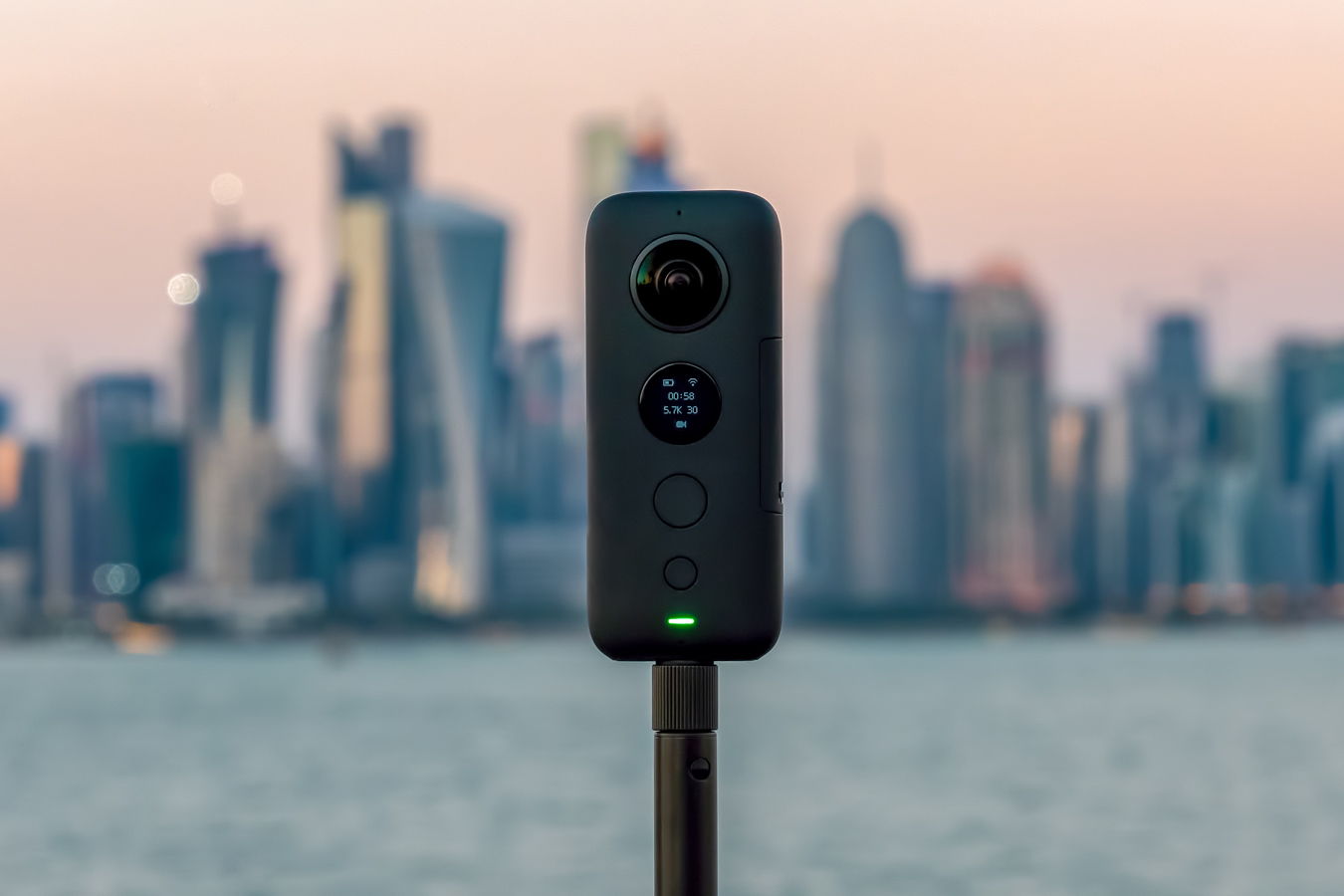
- Stereoscopic 360 Cameras: Cameras that capture both a 360-degree panorama and stereoscopic depth (e.g., certain Insta360 models) allow artists to create fully immersive, navigable 3D environments that viewers can explore in VR headsets.
- VR180 Cameras: These create immersive 180-degree stereoscopic videos, providing a focused yet deeply dimensional experience, ideal for artistic short films or virtual tours.
- The Power of Any Camera (with Vision): Fundamentally, any high-quality camera can still be the heart of a 3D photography workflow, whether for traditional stereoscopic pairs or for photogrammetry. The key lies in the artist’s vision and understanding of depth principles. Prioritize cameras with excellent sensors and dynamic range to ensure detailed, high-fidelity source images for your 3D work.

Other Essential 3D Photography Equipment
- Precision Tripod: A sturdy, reliable tripod is paramount for traditional stereoscopic capture. It ensures precise alignment and consistent camera height between your multiple shots, preventing visual discrepancies that can ruin a 3D effect.
- Dual Camera Mounts / Stereo Lenses: For capturing dynamic or moving subjects in true stereo, a dual-camera mount (allowing two cameras on one tripod) or a specialized stereo lens (which splits a single camera’s view into two perspectives) is essential. These tools ensure simultaneous capture for perfect synchronization.
- Dedicated LiDAR Scanners: For professional applications in architecture, cultural heritage preservation, or creating highly accurate digital twins of large spaces, specialized handheld or tripod-mounted LiDAR scanners (e.g., from Faro, Leica) offer industrial-grade precision in generating dense 3D point clouds.
- Photogrammetry Rigs: For artists focusing on detailed 3D modeling, advanced photogrammetry setups can include motorized turntables, controlled lighting environments, and even multi-camera arrays to automate the capture process and ensure optimal data for 3D reconstruction.
To learn more, take a look at our beginner’s guide to buying the right photography equipment, focusing on how different gear supports your specific 3D artistic goals.
3D Modeling: Photogrammetry, NeRFs, Gaussian Splatting, & Generative AI
3D modeling, a specialized form of 3D photography, has become an incredibly dynamic field, offering artists powerful tools to translate the physical world into digital assets or create entirely new 3D forms. It’s an exceptional addition to any creative’s online portfolio.
Core Techniques:
- Photogrammetry: This established technique involves capturing numerous overlapping photographs of an object or scene from various angles. Sophisticated software then analyzes these images to reconstruct a highly detailed 3D mesh, apply textures, and create a realistic digital model. Popular software includes RealityCapture, Agisoft Metashape, Meshroom (open-source), and accessible mobile apps like Polycam. Artists use photogrammetry to:
- Preserve Cultural Heritage: Creating digital archives of artifacts, sculptures, and historical sites.
- Develop Game & VFX Assets: Generating realistic models for virtual environments and visual effects.
- Sculptural Digital Twins: Replicating physical sculptures or props for digital display or further artistic manipulation.
Generative AI for 3D Creation:
The cutting edge of 3D art involves artificial intelligence generating 3D content from simple inputs, pushing the boundaries of creative possibility. Of course there are some considerations when using generative AI, and we’re addressing these in our series.
- Text-to-3D: Emerging AI models can generate foundational 3D models or scenes from basic text prompts (e.g., “a whimsical forest scene with glowing mushrooms”). While still nascent, this dramatically lowers the barrier for artists to conceptualize and rapidly prototype 3D ideas.
- Image-to-3D: Some AI tools can extrapolate 3D geometry and textures from a single 2D image, or intelligently “colorize” and texture existing 3D models based on creative input.
Creative Applications of 3D Modeling:
The artistic and professional applications of these 3D models are vast:
- Digital Twins for Art: Creating precise digital replicas of your physical artworks for online galleries, archival purposes, or interactive exhibitions.
- E-commerce & Product Visualization: Presenting products (e.g., handcrafted items, fashion accessories) as interactive 3D models on websites, allowing potential clients to explore them dynamically.
- Virtual Galleries & Exhibitions: Designing immersive 3D spaces to showcase your photography or digital art, allowing viewers to “walk through” and experience your work in a compelling new way.
- Augmented Reality Experiences: Developing AR filters or interactive installations where your 3D creations are overlaid onto the real world via smartphones or AR headsets.
- Gaming & Immersive Media: Contributing 3D assets for video games, virtual reality experiences, or interactive narratives.
When building your portfolio, choosing a platform that easily integrates interactive 3D content is key. Services like Sketchfab offer embedding tools, allowing you to seamlessly display your 3D models directly on your Format portfolio website, letting visitors rotate, zoom, and explore your work.

The Future of 3D Photography: Artistic Frontiers in Spatial Computing
The evolution of 3D photography is deeply intertwined with the burgeoning field of spatial computing–an emerging ecosystem where digital content interacts seamlessly with the physical world, primarily through advanced AR/VR/XR headsets. For photographers, artists, and creatives, this represents an exciting frontier for innovation.
- Immersive Storytelling: 3D photos, spatial videos, and volumetric captures are becoming fundamental mediums for truly immersive storytelling, allowing artists to create experiences that transport viewers into a memory, a dreamscape, or a meticulously crafted scene.
- Virtual Art Spaces: The demand for high-quality 3D content will drive the creation of increasingly sophisticated virtual galleries, digital installations, and interactive art experiences within the metaverse and other spatial platforms. As commercial galleries consider their physical spaces, these technologies can offer more than just a still, 2-D image.
- AI as a Creative Partner: Artificial intelligence will continue to democratize and accelerate 3D creation, transforming complex processes into intuitive tools. Expect AI to not only automate depth generation but also to become a collaborative partner in ideation, generating initial 3D forms, textures, or even entire scenes from artistic prompts, freeing up artists to focus on conceptualization and refinement.
While the ethical considerations of AI-generated content and privacy in 3D scanning are important aspects to navigate, the sheer creative potential for artists to push boundaries and define new forms of visual expression is immense.
Showcase Your 3D Artistic Vision!
Now that you’re equipped with the knowledge to capture and create 3D imagery, the next step is to thoughtfully integrate it into your online portfolio.
If you don’t yet have an online portfolio tailored for a creative professional, now is the time to build one! Look for website builders that offer highly customizable templates, flexible layouts to showcase diverse media, and robust support for embedding interactive 3D models (e.g., Sketchfab embeds) and spatial videos. Your portfolio should not just display your final work, but also hint at the innovative processes behind it. Format’s portfolio platform offers enhanced customization, media embedding and has 90+ themes to choose from to showcase your work.
Consider including a built-in blog or case study section. This allows you to articulate your creative process, share insights into your technical choices. Personalize and narrate the artistic journey behind your 3D work and you’ll give incredible insight to your viewers to help them connect to your process.
We can’t wait to see how you leverage these new dimensions to create new and exciting works of art.
Connect With Your Community
Level up your brand with a professional portfolio website.